Authored by Rodrigo Werle and Shawn Conley
Expanding farm sizes and unpredictable harvest weather increase the risk of soybean yield and quality loss, especially when harvest delays past physiological maturity (R8) lead to over-dry seeds and pod shatter. To address these operational bottlenecks, the Science for Success team evaluated desiccant harvest aids across 19 sites in 13 states in 2024. For the full national trial results, read our publication, Impact of Harvest Aid on Soybean. For a quick summary tailored to Wisconsin growers, here are the key takeaways:
- Applicators don’t want to spray paraquat, and Sharpen and Aim are frankly ineffective in our northern climate. That leaves us sodium chlorate.
- Desiccation at R6.5 reduced soybean seed yield by 4.3- 9.2% and reduced protein and oil yield by 4.5-10.7% across all locations.
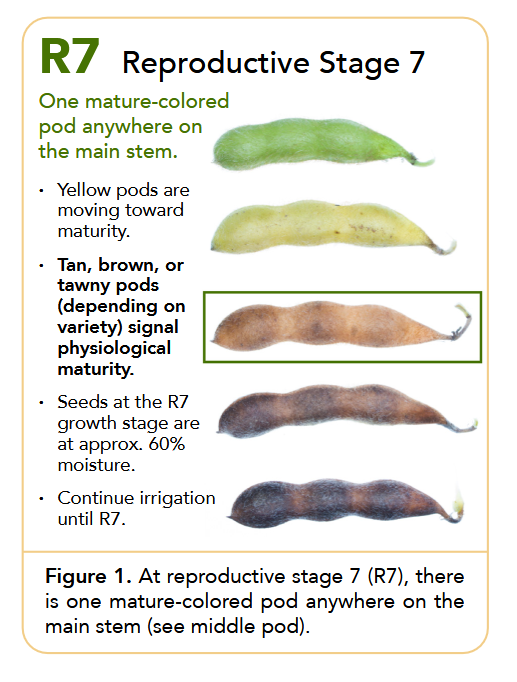
- Desiccation at R7 rarely reduced soybean seed yield and had no effect on protein and oil yield across all locations.
- Soybean desiccation allowed for 4 days earlier harvest in the northern United States and 15 days earlier harvest in the southern US.
- Soybean desiccation minimally reduced incidence of green stem about 50% of the time across all locations.
In a BeanPod & IMHO: Our experience in northern climates suggests that sodium chlorate added some value to our system. However, in most years waiting for a natural frost to handle the dry-down may prove the most economical.