Damon Smith, Extension Field Crops Pathologist, Department of Plant Pathology, University of Wisconsin-Madison
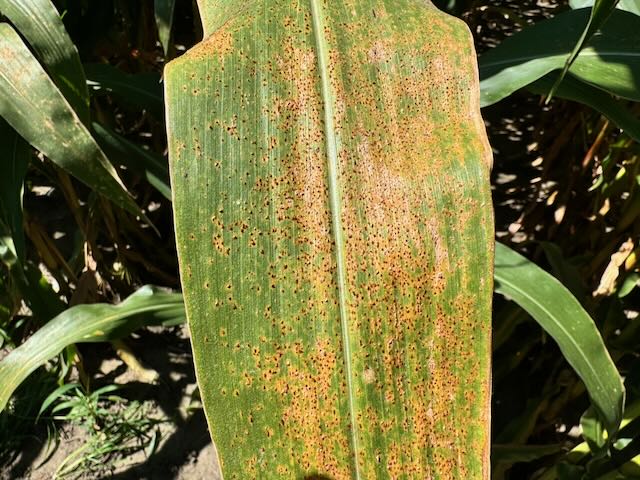
Figure 1. Southern rust pustules on a corn leaf.
We continue to get new corn southern rust (Figure 1) reports and management questions almost daily. Much anxiety exists out there about the continued progress of the disease in the state and if in-season management is needed.
Plant pathologists around the country are watching the situation carefully, especially since 2025 was a banner year for southern rust. Fortunately, the situation in 2026 isn’t quite what it was in 2025 for Wisconsin farmers. Like I have mentioned before, it is not time to panic.
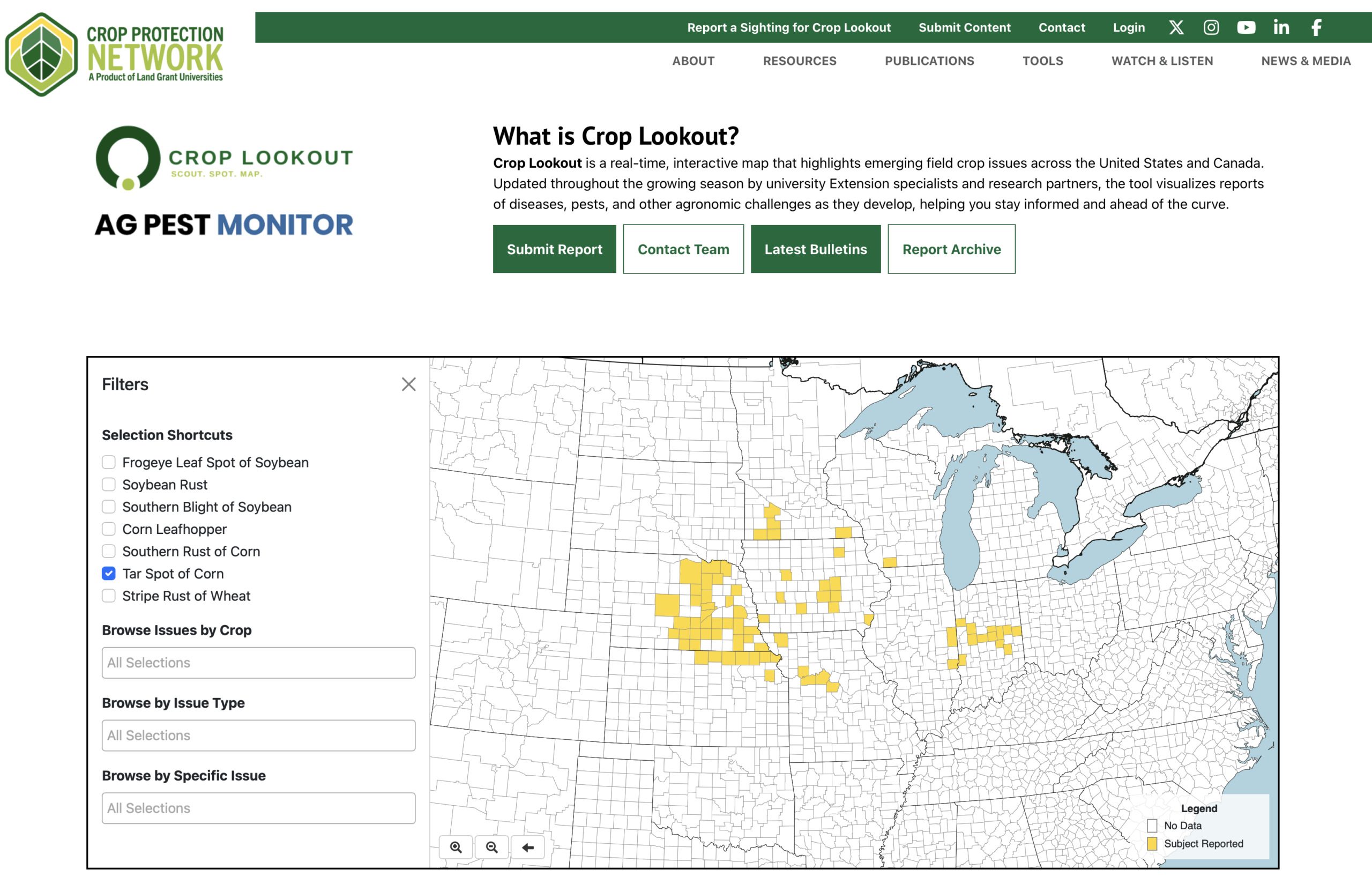
You can track current reports using the Crop Protection Network Crop Lookout Tool.
You can also read my previous article on southern rust, but I will do my best to break down what to do as we get into late-season management decisions. Let’s start with some of the questions.
Is southern rust new to Wisconsin? No, I can find southern rust in corn fields just about every year. The difference is, that on average, it shows up in September after yield is determined and at levels that most people don’t even notice.
Has the fungus adapted to overwinter in Wisconsin? No, it has not. Biology doesn’t change this fast. The spores of the southern rust fungus must still be blown into Wisconsin from southern states.
Why has southern rust been such a nuisance in 2025 and 2026? Several factors are contributing to the greater than average severity of southern rust in parts of Wisconsin.
First, there are corn hybrids that are more susceptible to the southern rust pathogen being planted in the state. We don’t see complete resistance or immunity to southern rust, but there are hybrids which show good partial resistance, slowing the fungal progression and ending the season with less southern rust than a susceptible hybrid.
Second, the weather over the last several seasons is such that VERY HOT and wet weather systems have been prominent in July which has driven spore movement from southerly states and subsequent infection of corn in Wisconsin. In 2026, it has been clear that the spore movement occurred in July and was driven by weather systems that pulled spores up through Iowa into Minnesota and then to northwest Wisconsin, where the first reports of the disease were made in early August. This is about a month earlier than average in Wisconsin, generating lots of interest and anxiety.
Is the southern rust severity we are seeing in 2026 like that of 2025? No, the severity at present is less than what we saw by this same time in 2025. Cooler weather in August has meant that the secondary cycles of the fungus have slowed. The fungus has “southern” in the name for a reason (Quoting Dr. Travis Faske, University of Arkansas). It likes it HOT! Moderate daytime high temperatures and cool (in the 50s) lows at night are NOT conducive for southern rust to move quickly.
Should I spray a fungicide at the R4 (dough) or R5 (dent) corn growth stages? No! This is especially true in the current economy of tight margins. As I pointed out in my previous article, the research-based fungicide decision matrix for southern rust clearly states that spraying at R4 is unlikely to provide an economic return and spraying at R5 definitely won’t provide an economic return relative to not treating with a fungicide.
Will a fungicide at R4 (dough) or later preserve corn standability? No, it will not. Several researchers in the southern U.S. have conducted timing of application trials for southern rust and documented lodging/standability scores. Dr. Kiersten Wise at the University of Kentucky shared Figure 2 with me clearly showing one of these trials. In that work an application of fungicide at the R4 growth stage resulted in lodging scores similar to the nontreated control. The best time to control rust AND reduce lodging from the disease is at the VT (tassel) corn growth stage.
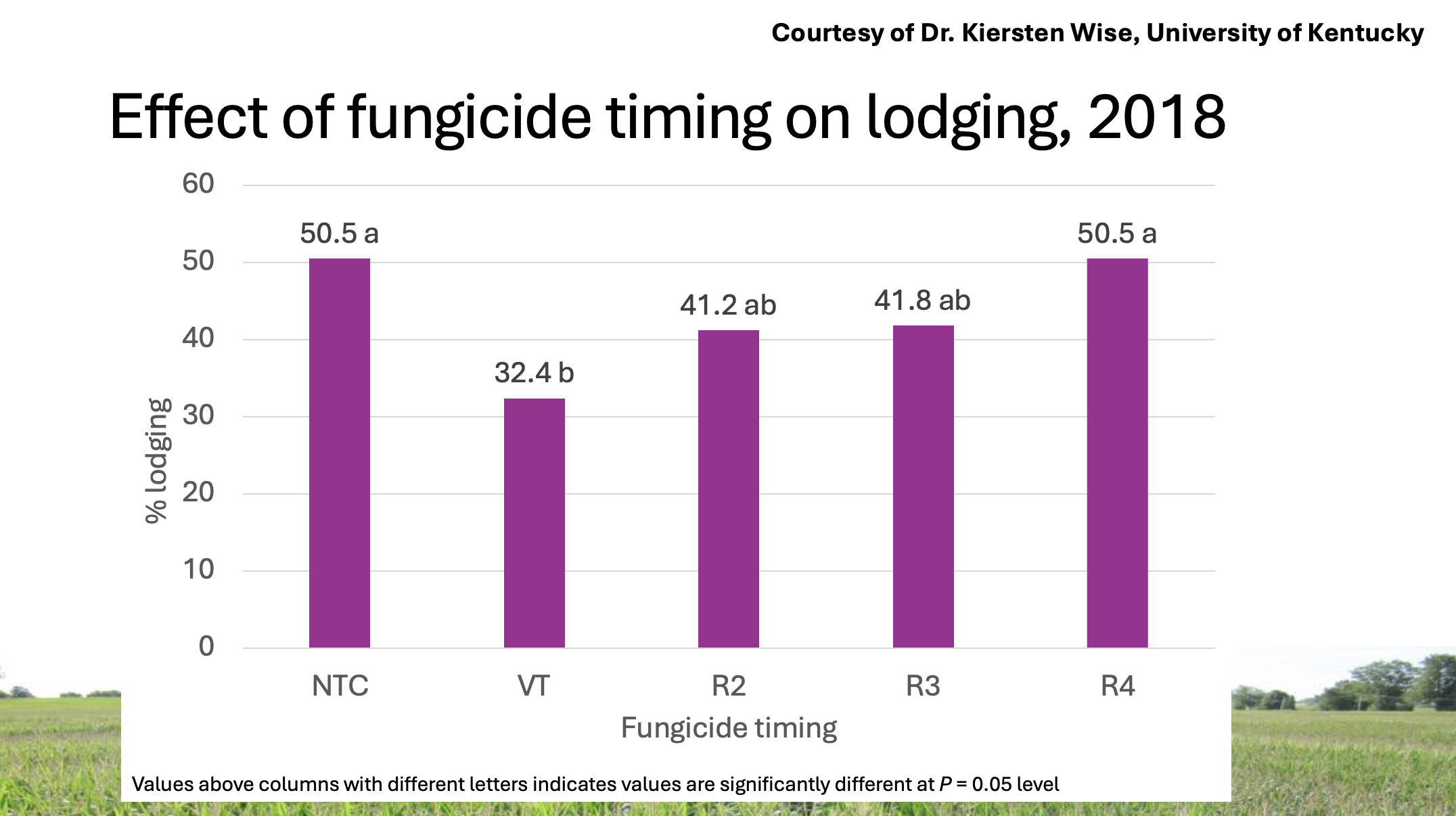
Figure 2: Timing of fungicide application in field corn to control southern rust and resulting lodging scores.
What should I do now for southern rust in Wisconsin? Again, don’t panic. Severity of southern rust this season has not been as bad as 2025. Remember, this disease can LOOK very bad but not amount to much yield loss when the combines roll.
Farmers should scout fields and prioritize fields with high southern rust severity to be harvested first. This will help reduce lodging losses. Southern rust does force dry-down to happen more quickly, helping in the prioritization of early harvest for fields with heavy southern rust.
Farmers should also get a look at hybrids in various trials near them. Prioritizing the purchase of partially resistant hybrids in 2027 will help to reduce the impact of southern rust in future seasons.
Need Help Identifying Rust?
If you are uncertain whether rust symptoms in your field are southern rust or another disease, samples can be submitted to the University of Wisconsin Plant Disease Diagnostic Clinic (PDDC).
Send leaf samples in a sealed plastic bag without added moisture. Information about submitting samples and clinic services is available on the PDDC website.