Damon Smith, Extension Field Crops Pathologist, Department of Plant Pathology, University of Wisconsin-Madison
If you’re like me, you’ve been following reports from southern and Midwestern states showing that southern rust of corn is moving north again this year. Over the past two weeks, we have confirmed southern rust in both northwestern and south-central Wisconsin.
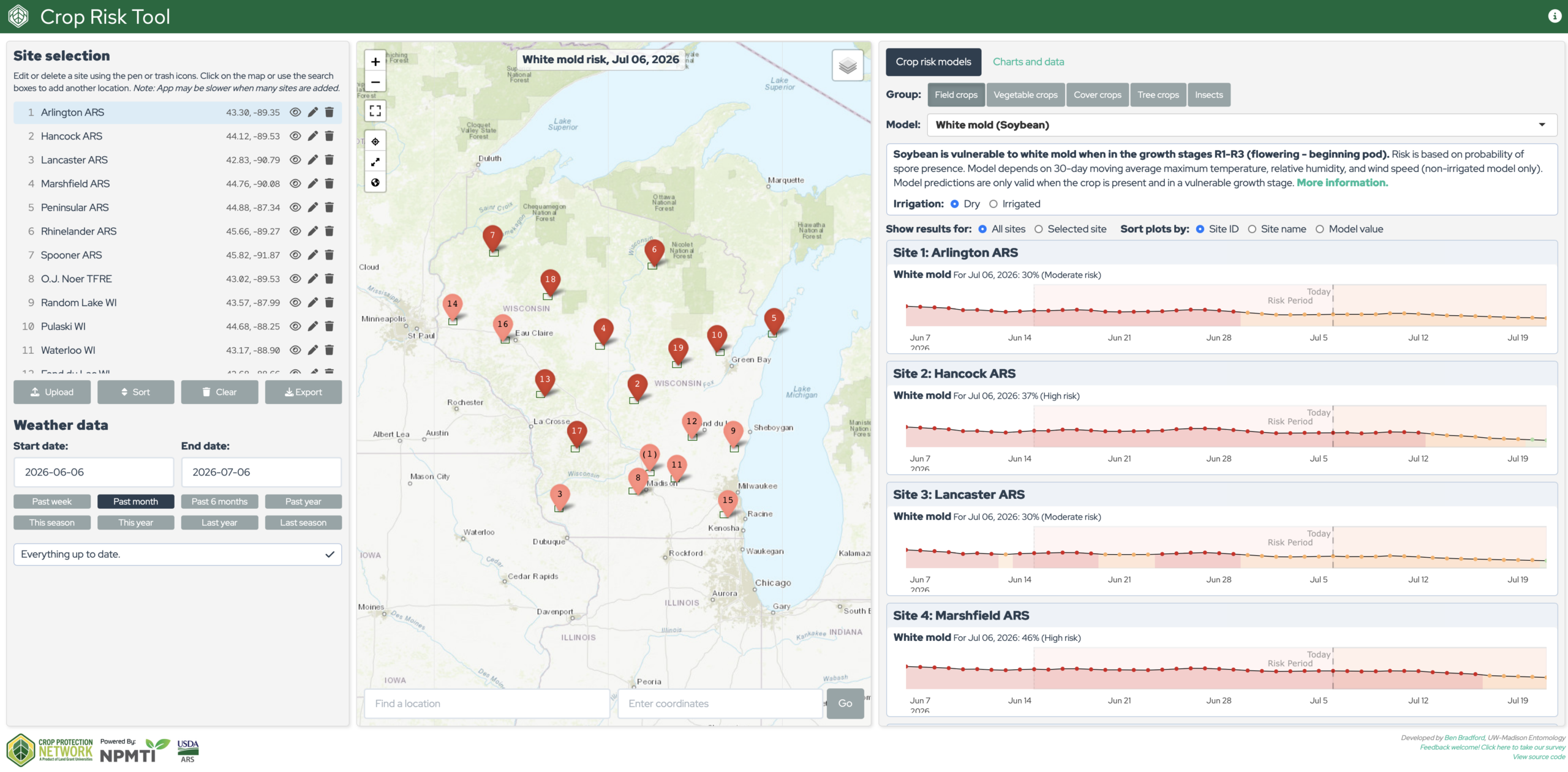
You can track current reports using the Crop Protection Network Crop Lookout Tool.
Now that southern rust has been found in Wisconsin, it’s important not to panic. Instead, focus on careful scouting over the next several weeks. Timely scouting will help guide both silage and grain harvest decisions.
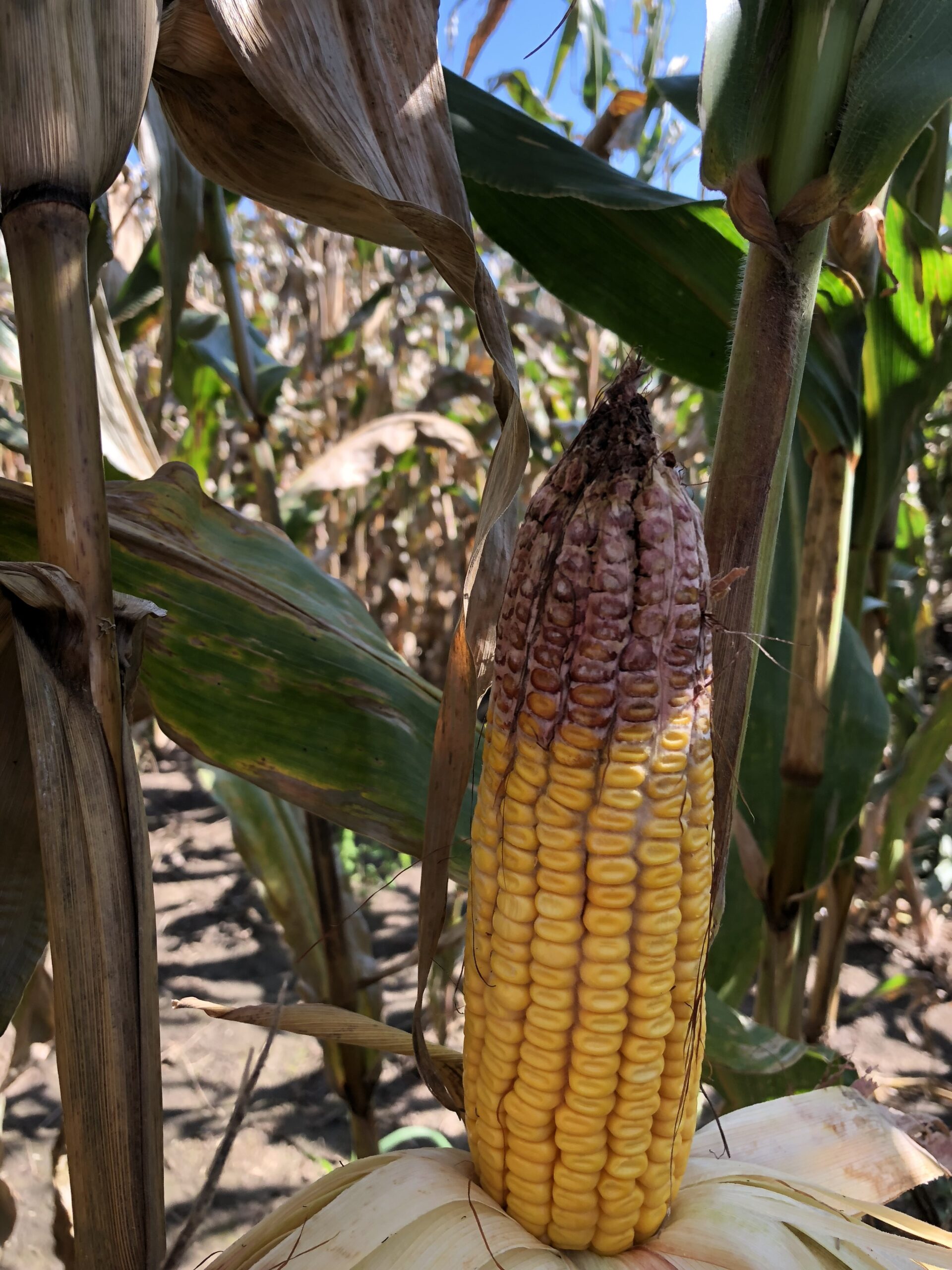
Yield losses are most likely when southern rust becomes established before the milk (R3) growth stage. Farmers should be out scouting corn now, determining crop growth stage, and checking fields for symptoms of southern rust. For more information on identification, see my previous article on what to look for.
Southern rust can also affect silage production. Like other foliar diseases, it can cause plants to dry down prematurely, potentially influencing harvest timing and forage quality. For grain corn, farmers should keep track of fields where southern rust is present and consider harvesting those fields first if standability becomes a concern later in the season.
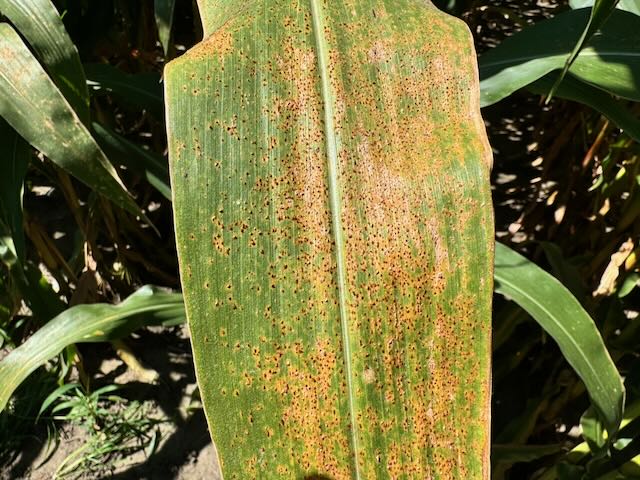
Figure 1. Southern rust pustules on a corn leaf.
What Is Southern Rust?
Southern rust is caused by the fungus Puccinia polysora. Its symptoms differ from those of common rust. Pustules are typically smaller, brighter orange to reddish-orange in color, and are often concentrated on the upper leaf surface (Figure 1). They also tend to occur in dense clusters.
Warm temperatures and high humidity favor disease development, with optimal temperatures around 80°F. However, very little free moisture is required for infection.
Unlike many crop diseases, southern rust does not survive Wisconsin winters. Spores must be carried north each year on wind currents from tropical regions or from infected corn fields in the southern United States. As a result, fields that had southern rust last year are not necessarily at risk this year, and fields that escaped infection last year may develop disease this season.
Because disease risk depends on annual spore movement and weather conditions, farmers should continue monitoring the Crop Lookout Tool, local weather forecasts, and their fields throughout the season.
Management of Southern Rust
Historically, hybrid resistance was an effective management strategy. However, in 2008, a resistance-breaking race of the southern rust pathogen was confirmed in Georgia. As a result, many modern corn hybrids are considered susceptible.
Crop rotation and residue management do not affect southern rust because the fungus requires living corn tissue to survive and cannot overwinter in Wisconsin.
In regions where southern rust occurs regularly, fungicides are commonly used for disease management. Fungicide performance ratings are available in the Corn Fungicide Efficacy Table.
As noted above, corn infected before the R3 (milk) growth stage is at the greatest risk for yield loss. Farmers can use the available decision-support matrix to help determine whether a fungicide application is likely to provide an economic benefit.
Need Help Identifying Rust?
If you are uncertain whether rust symptoms in your field are southern rust or another disease, samples can be submitted to the University of Wisconsin Plant Disease Diagnostic Clinic (PDDC).
Send leaf samples in a sealed plastic bag without added moisture. Information about submitting samples and clinic services is available on the PDDC website.