Damon L. Smith, Extension Field Crops Pathologist, Department of Plant Pathology, University of Wisconsin-Madison
The start to the 2026 field crop season has been reasonably quiet in terms of disease. Dry weather after the start of corn and soybean planting has kept major seedling disease pressure reasonably low. Close monitoring should take place as rain steps back into the forecast this week.
The dry weather doesn’t mean that no diseases are present. Several reports of powdery mildew on winter wheat were made last week. Powdery mildew of winter wheat is caused by the fungus Blumeria graminis f. sp. tritici. The most notable sign of powdery mildew is the white, fluffy fungal growth that occurs on the surface of leaves. Yellow spots may be present on the underside of the leaf. The white “tufts” might also have very small black pepper-like structures in them. Generally, the disease will start in the lower canopy, and if weather is favorable, will move up the canopy eventually reaching the flag leaf and even infecting heads on susceptible varieties.
The reason that powdery mildew has been an issue this year on susceptible varieties, despite the dry weather, is that it happens to like cool night-time conditions combined with high humidity and dew events. Warm days and cool nights often lead to dew and extended periods of leaf wetness (think semi-arid climates). This combined with temperatures less than 80 F, means the fungus can thrive on susceptible varieties where humidity has been high. Excessive rain events actually deter this particular fungus, as heavy rain events can wash spores from the leaf. So, it isn’t surprising that we are seeing powdery mildew right now given the weather we have had in parts of the state.
Should you spray fungicide for powdery mildew?
Most of the time I would say no. Often in Wisconsin, the weather begins to turn much warmer as we approach heading and the fungus will stop spreading and remain a novelty in the lower canopy. Remember, once daytime temperatures get above 80 F, the fungus will stop or slow in progression. The key in making the fungicide spray decision is to know the susceptibility of the variety you planted and watch the weather. If the weather remains conducive (temps below 80 F, no rain, but dew) and the variety is ranked susceptible, then spraying around flag leaf emergence might be warranted. You can consult the “Fungicide Efficacy for Control of Wheat Diseases” table for products rated with the best efficacy for powdery mildew. Note that most of the higher rated products are triazole compounds, or compounds with a triazole in their mix. No need to be fancy here, find something that fits your budget and has good efficacy. There should be ample choices.
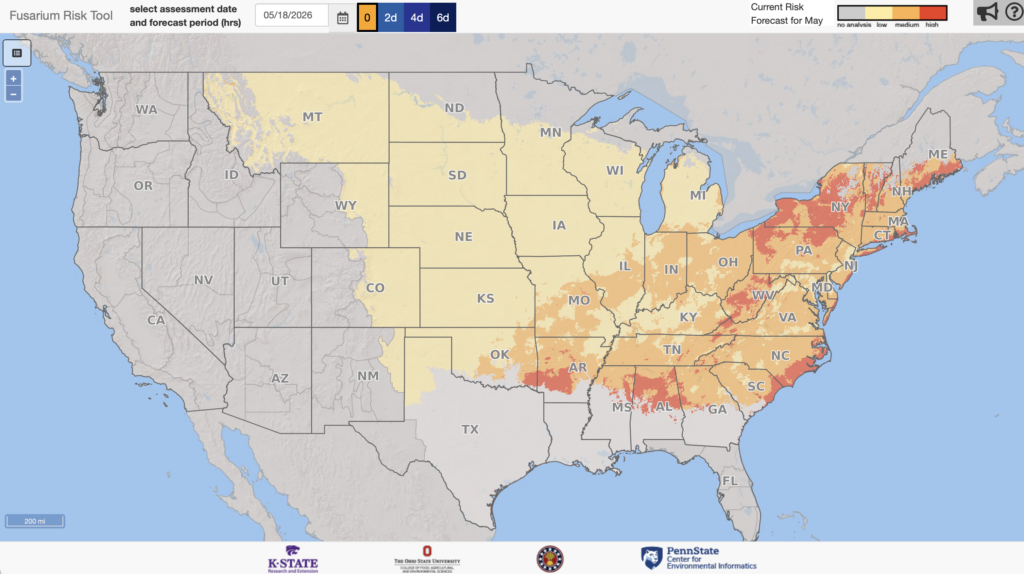
Figure 1. Risk of FHB for the U.S. as of May 18, 2026. Image from wheatscab.psu.edu.
I don’t care about powdery mildew, but what disease should I keep an eye on next?
Fusarium head blight (FHB; scab) has been a perennial problem for us in Wisconsin over the last decade. Not only have we seen significant damage and yield reductions due to the disease, but we have seen significant discounts at the elevator for levels of deoxynivalenol (DON or Vomitoxin) above 2 ppm.
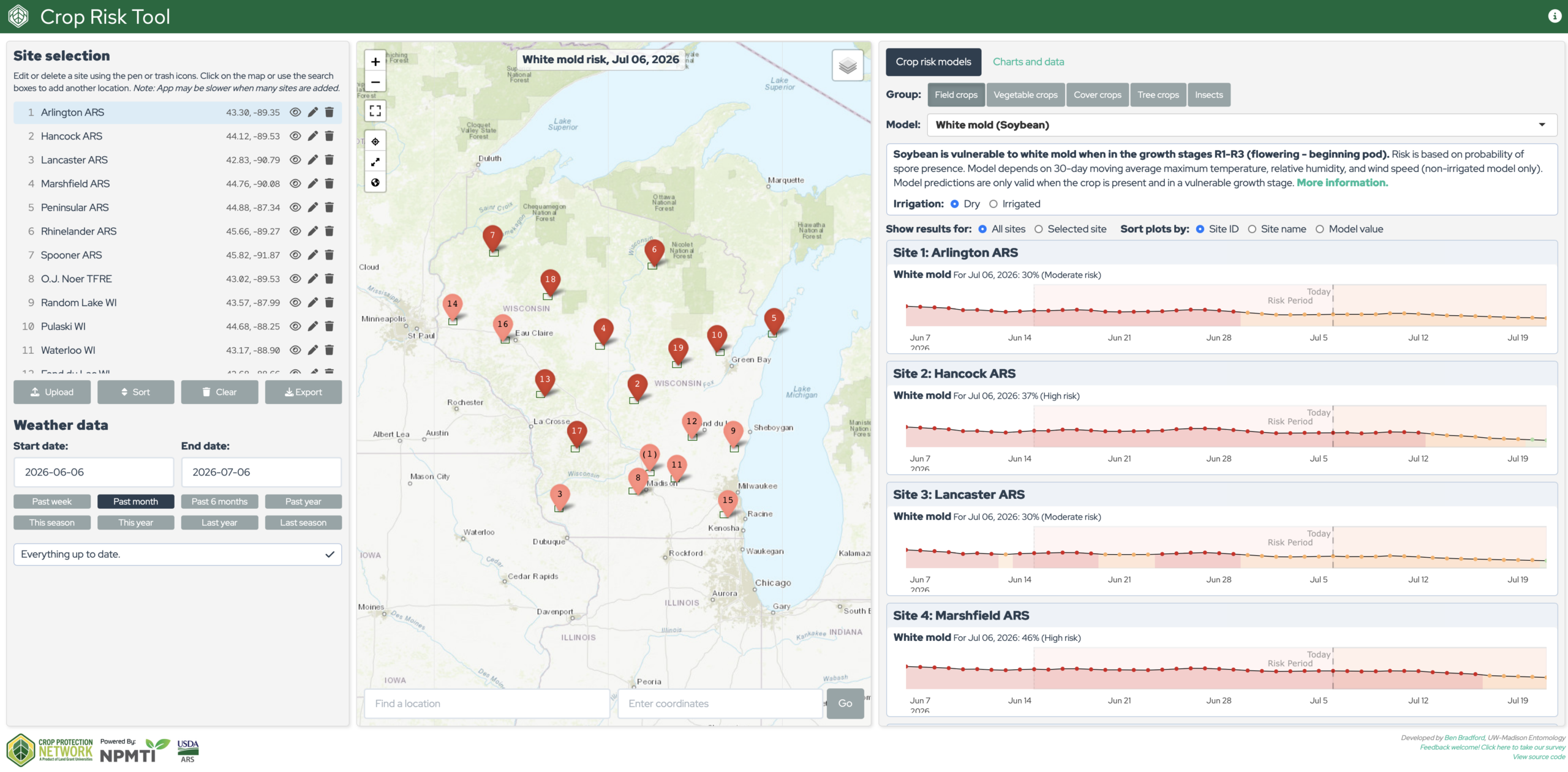
Be sure you know the relative susceptibility of the varieties you have planted. We have excellent data showing significant reductions of FHB where we use a resistant variety and then layer a fungicide application on top. You can find FHB forecasts tailored to variety susceptibility both at the Crop Protection Network Crop Risk Tool and the Fusarium Risk Tool. While it is a little early for anthesis and spraying fungicide for winter wheat in Wisconsin, it is worth beginning your monitoring of risk. Figures 1 and 2 show the current risk of FHB in WI on susceptible varieties to be low. However, if rain and warm temperatures align near anthesis, risk can quickly increase and an application of fungicide should be made.
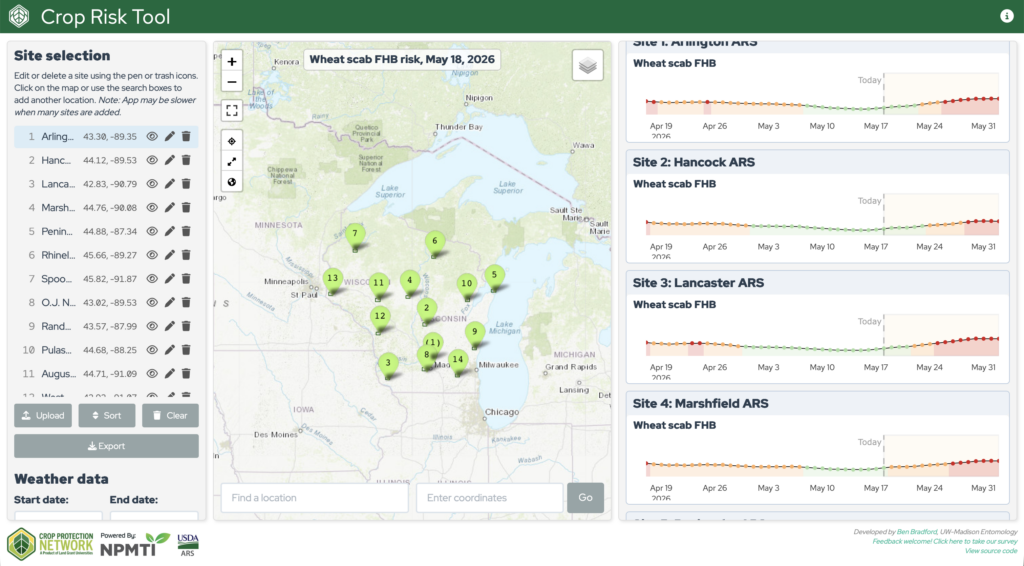
Timing is everything when using a fungicide for FHB management. Be sure to time applications at the start of anthesis or within 5-7 days after the start. This is the ideal window of opportunity to control FHB and reduce DON levels in the finished grain. Spraying earlier than anthesis or later than about a week after the start of anthesis will result in lost efficacy, or no control of FHB. If you need help with growth staging, be sure to check out the “Visual Guide to Winter Wheat Development and Growth Staging.” When it comes to fungicides for FHB, there are a few to choose from. These are Prosaro, Miravis Ace, Prosaro Pro, and Sphaerex. Again the “Fungicide Efficacy for Control of Wheat Diseases” table shows the efficacy ratings of these products against FHB.
A word about stripe rust
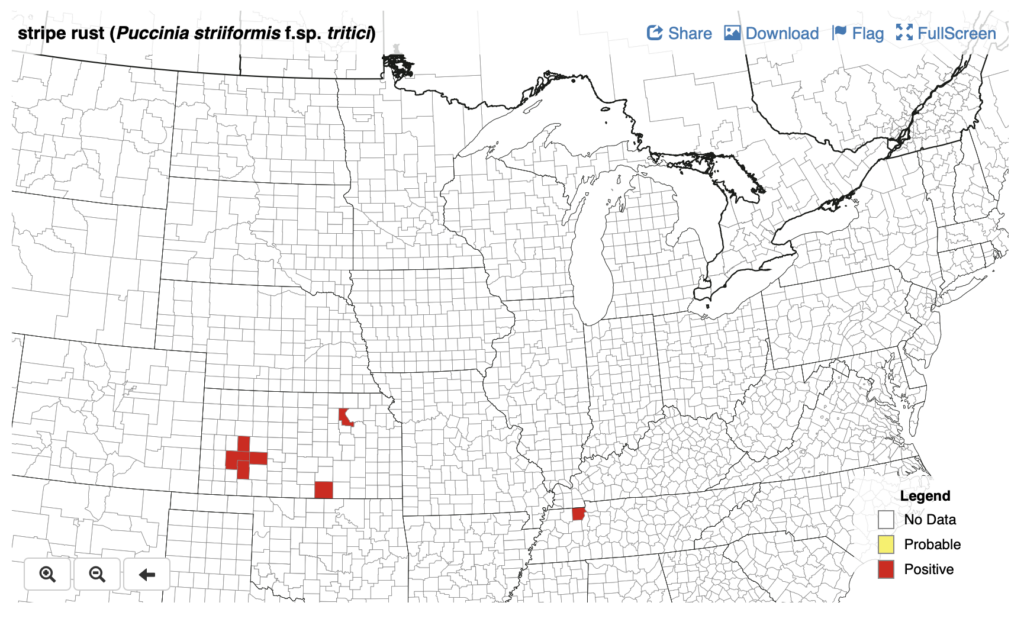
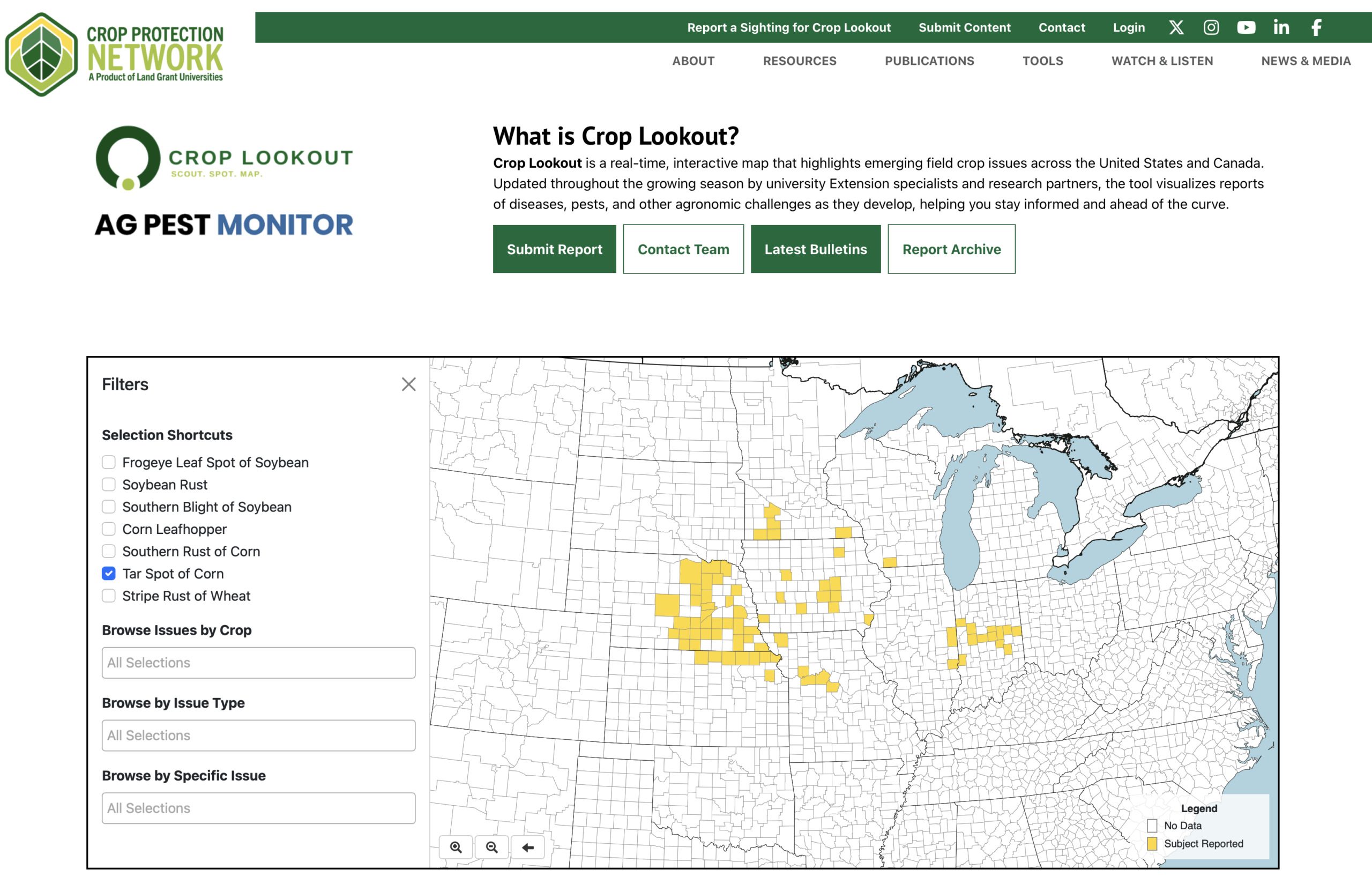
Stripe rust is favored by prolonged periods of rain (or dew), high relative humidity, and cool temperatures ranging from 50 to 60 ºF. Now is the time to scout for stripe rust, especially as we approach the heading and anthesis times across the state. Currently the only reports of stripe rust are in Tennessee and Kansas, with none near Wisconsin (Fig. 3). We will continue to monitor the situation, and you can check for the latest stripe rust progress by visiting the stripe rust of wheat map.
The ‘Take Home’ for wheat management over the next several weeks.
- Continue to scout for stripe rust and powdery mildew. Know what you are trying to manage in winter wheat!
- Plan to apply an FHB fungicide application – especially on susceptible varieties
- Shoot for Anthesis or up to 5-days after the start of anthesis for the fungicides rated “G” for FHB in this table.
- All of the available fungicides rated for FHB are also effective against stripe rust and powdery mildew. Thus, one fungicide can manage both problems!
- You can go slightly earlier (Feekes 10.5; Efficacy slightly reduced compared to typical timing) up to 5-days after the start of anthesis for Miravis Ace to manage FHB.
- Watch the “Scab Alerts” – it isn’t perfect but can help you plan (http://www.wheatscab.psu.edu).
- If you do spray for a foliar disease prior to anthesis, you will need to come back with a second fungicide application specifically for FHB. Remember, spraying prior to anthesis is not effective for managing FHB.