Damon L. Smith Extension Field Crops Pathologist Department of Plant Pathology, University of Wisconsin–Madison
Mycotoxins, especially deoxynivalenol (DON or vomitoxin), remain one of the most difficult challenges in silage corn production. Produced by fungi such as Fusarium graminearum, these toxins can reduce silage quality and negatively impact dairy performance. Importantly, mycotoxins develop in the field and can continue to change during ensiling, meaning management decisions made during the season have lasting effects all the way to feedout.
A key reality is that mycotoxins cannot be eliminated after contamination occurs. Instead, producers must manage risk throughout the season, especially as the crop moves from mid-season into grain fill and harvest.
Understanding the Risk
DON can accumulate in both:
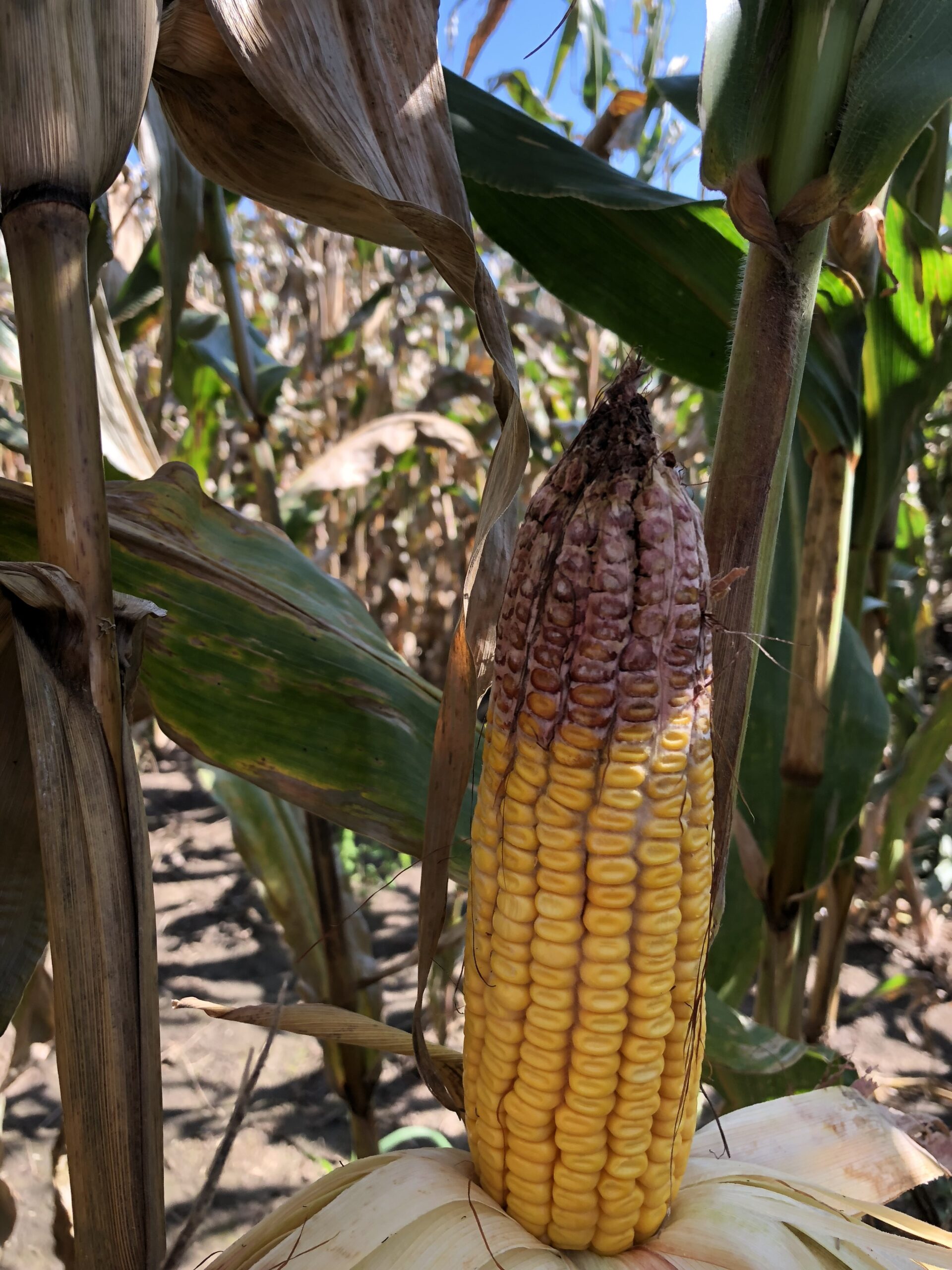
- Ears (ear rot)
- Stalks (often without visible symptoms)
Contamination of these two sources are not necessarily related, so silage fields with minimal visible ear rot can still have high DON concentrations at harvest due to stalk accumulation. The health of the entire plant has to be managed during the season.
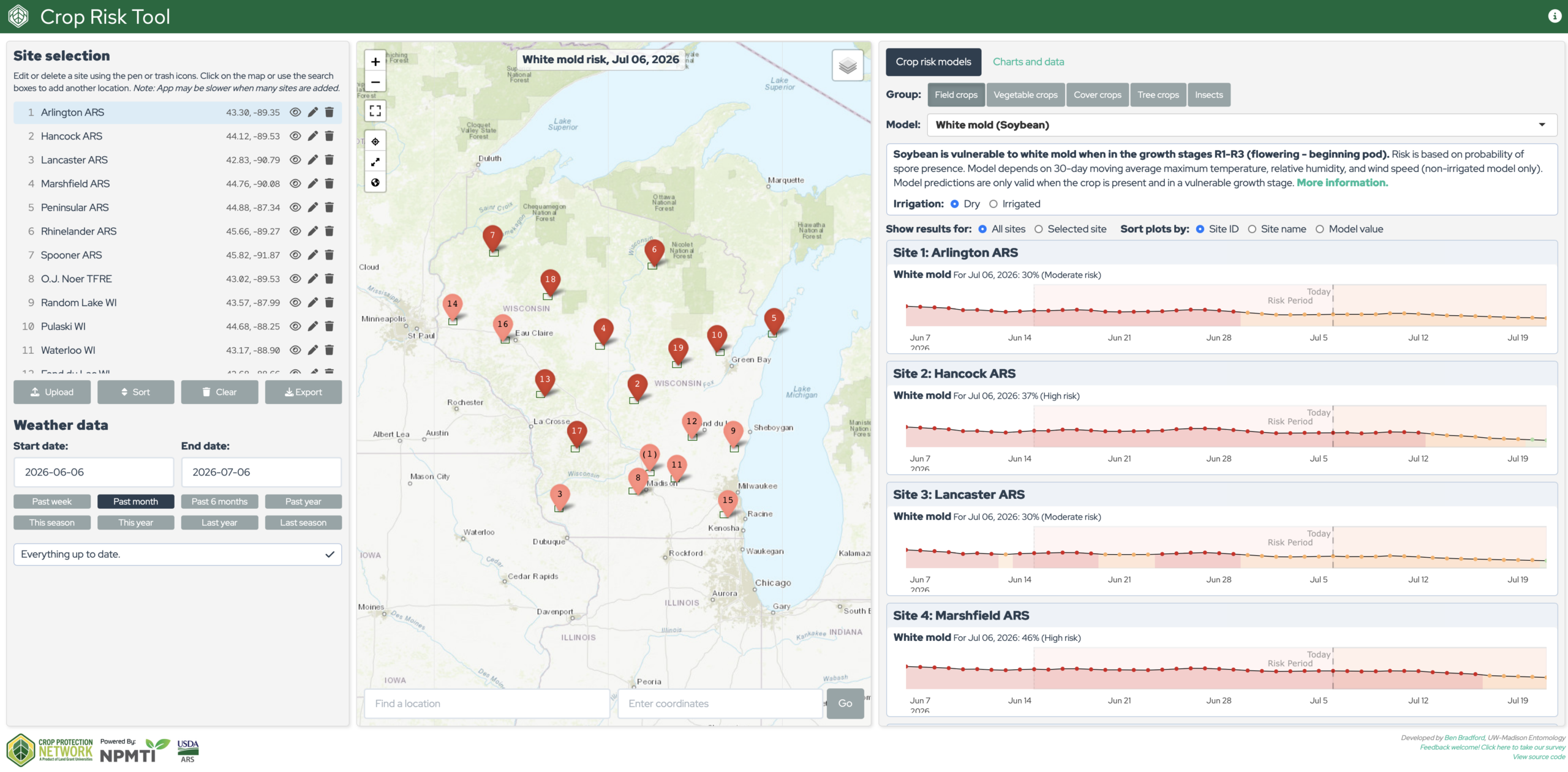
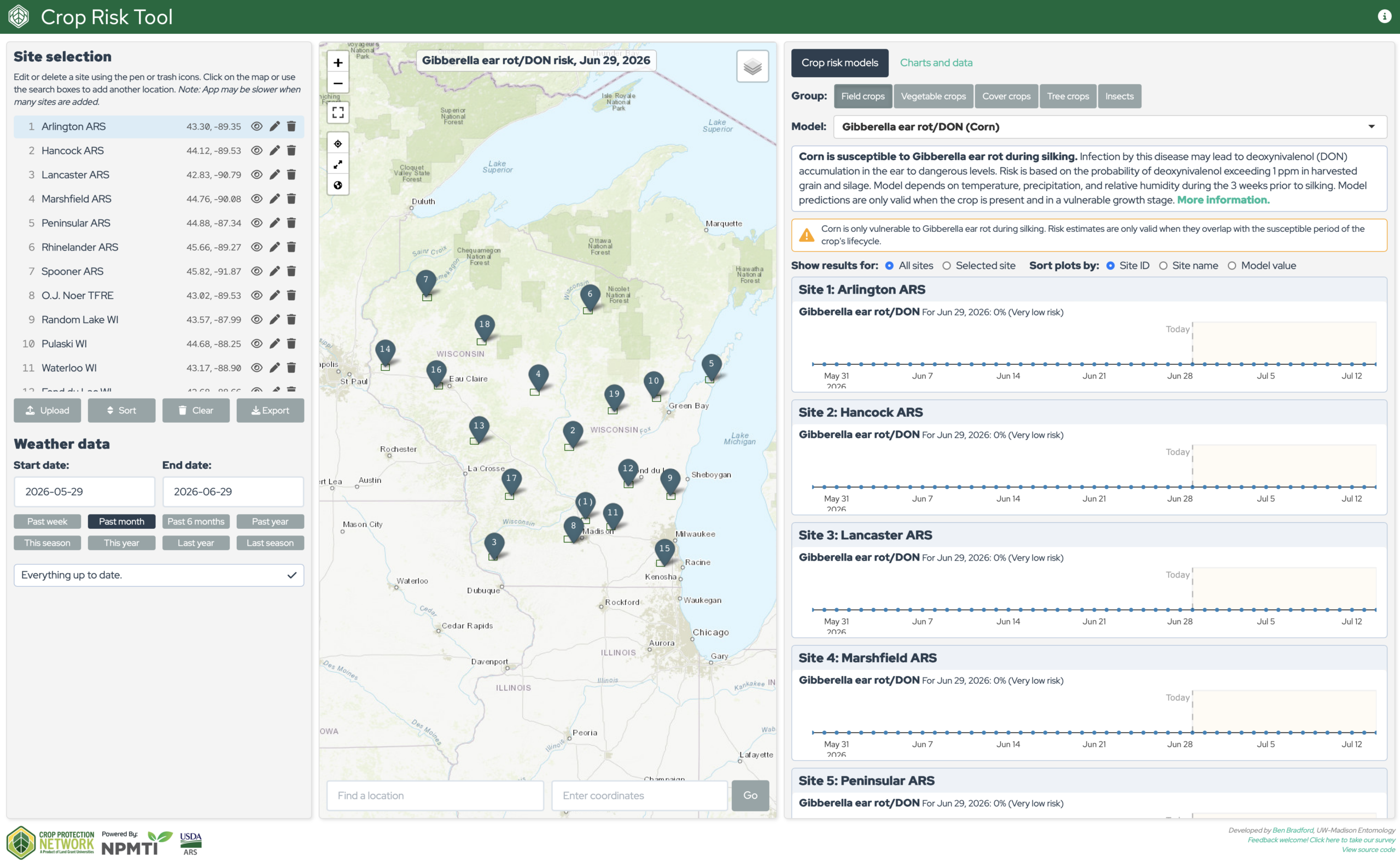
In Wisconsin and the broader Great Lakes region, the pathogen survives in residue and is commonly present, making favorable weather conditions the primary driver of outbreaks. Plant stress, insect damage, and foliar disease can all increase the likelihood of infection and toxin development. The Crop Protection Network has a DON prediction model available on the Crop Risk Tool. This tool allows for the forecast to be run for any GPS coordinate in the U.S. or Canada. Figure 1 illustrates the risk of high DON levels at the end of the season based on the current weather IF the crop was silking. This latter piece is critical as the fungus can only infect the ear portion of the plant during the white silk period. Obviously, risk is low at this time, but this tool should be monitored closely as you approach the silking window for your hybrid.
Mid‑Season Management Priorities
- Scout fields thoroughly and often
Evaluate:
- Ear rot symptoms
- Stalk health and lodging risk
- Foliar diseases (e.g., tar spot)
Do not rely only on visible ear rot alone, stalk infections can contribute significantly to DON concentrations in material put in the bunker.
- Understand hybrid risk
Hybrid selection plays a role in DON accumulation.
- Brown midrib (BMR) hybrids often show higher DON levels than conventional hybrids.
- Use mid-season observations to identify fields that may require earlier harvest or more intensive management
- Manage foliar disease to protect silage quality
Foliar diseases such as tar spot can:
- Accelerate plant dry-down
- Reduce carbohydrate availability
- Lead to poor fermentation conditions at harvest
These factors indirectly increase spoilage risk and mycotoxin challenges.
- Be realistic about fungicide performance
Fungicides can help manage disease, but DON reduction based on the fungicide alone is inconsistent.
- Timing is critical: white silk through ~5–7 days after is key. See comments above about the crop risk tool
- Applications of fungicide outside this window have reduced effectiveness
- If insect damage is driving infection, fungicides may provide limited benefit
- Monitor and manage insect pressure
Ear-feeding insects create entry points for fungal pathogens.
- Bt traits or insecticides can help limit this pathway in some cases
- Start planning your harvest now
Harvest timing is one of the most important tools for managing mycotoxins. Poor harvest moisture leads to reduced packing, oxygen exposure, and increased spoilage risk.
With that said, consider earlier harvest in diseased fields to limit continued DON accumulation and improve fermentation conditions.
- Prioritize silage management before harvest
Conditions at harvest strongly influence mycotoxin levels during storage.
DON can increase during the first 30 days of ensiling due to:
- Residual oxygen
- Fungal activity
- Breakdown of “masked” DON compounds
Plan for:
- Adequate packing
- Rapid filling
- Effective sealing to exclude oxygen
- Develop a testing strategy
Testing is essential to understand risk and make feeding decisions.
- Test at harvest (baseline)
- Continue monitoring in storage and at feedout
DON measured at harvest may increase during fermentation, so early results should be interpreted cautiously.
Key Takeaways
- Mycotoxins originate primarily in the field and cannot be removed once present
- Visible ear rot is not a reliable indicator of total DON risk
- Mid-season management influences both harvest and storage outcomes
- Harvest timing and silage management are critical control points
- Testing is necessary to guide feeding strategies
Bottom Line
Scout hard, harvest at the right moisture, and pack silage correctly.
Additional Resource: Mycotoxins and Silage – How to Feed the Dairy