Damon L. Smith, Extension Field Crops Pathologist, Department of Plant Pathology, University of Wisconsin-Madison
Brian Mueller, Researcher II, Department of Plant Pathology, University of Wisconsin-Madison
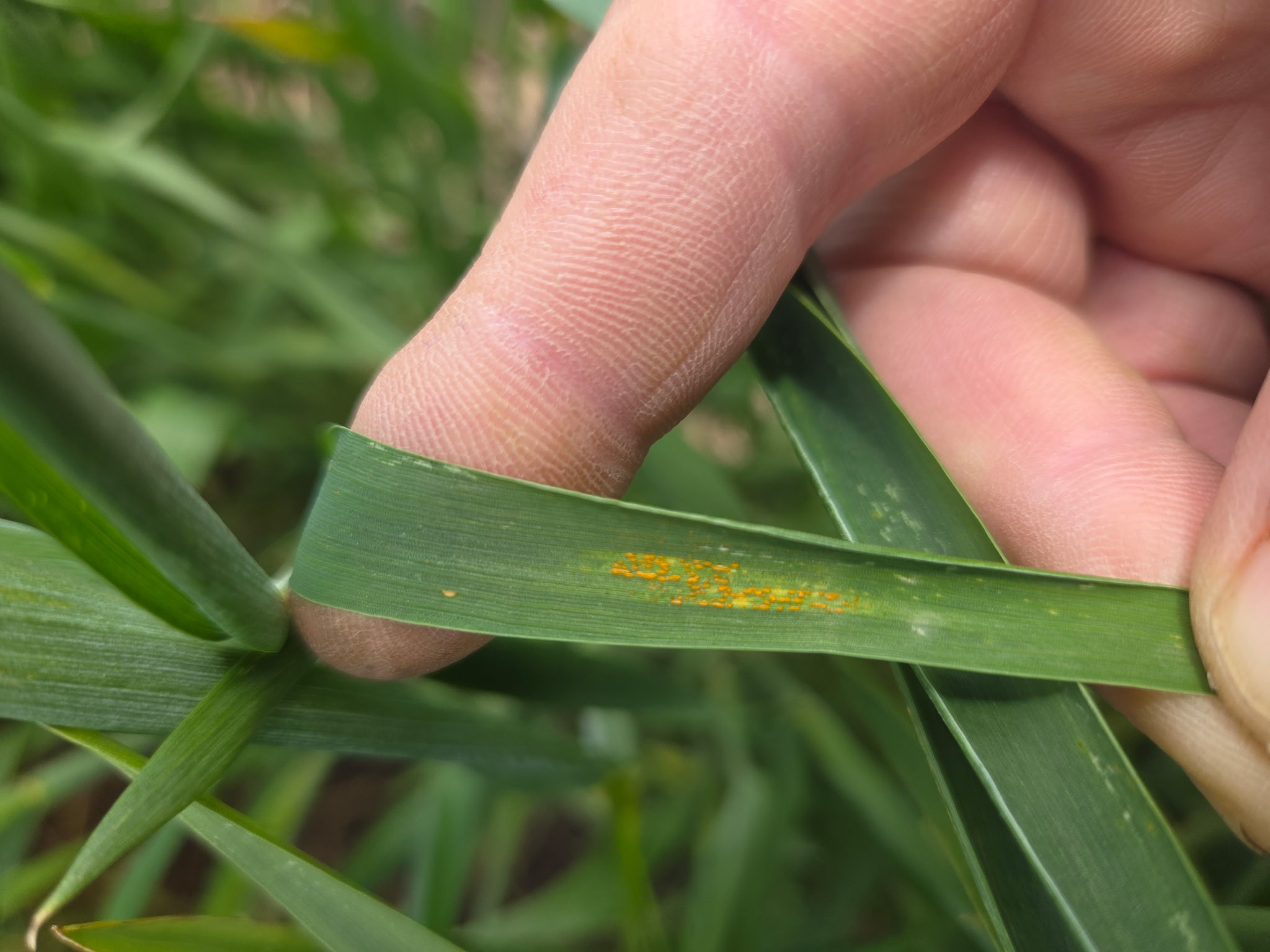
Figure 1. Stripe rust on a winter wheat leaf. Photo Courtesy of Brian Mueller, UW-Madison.
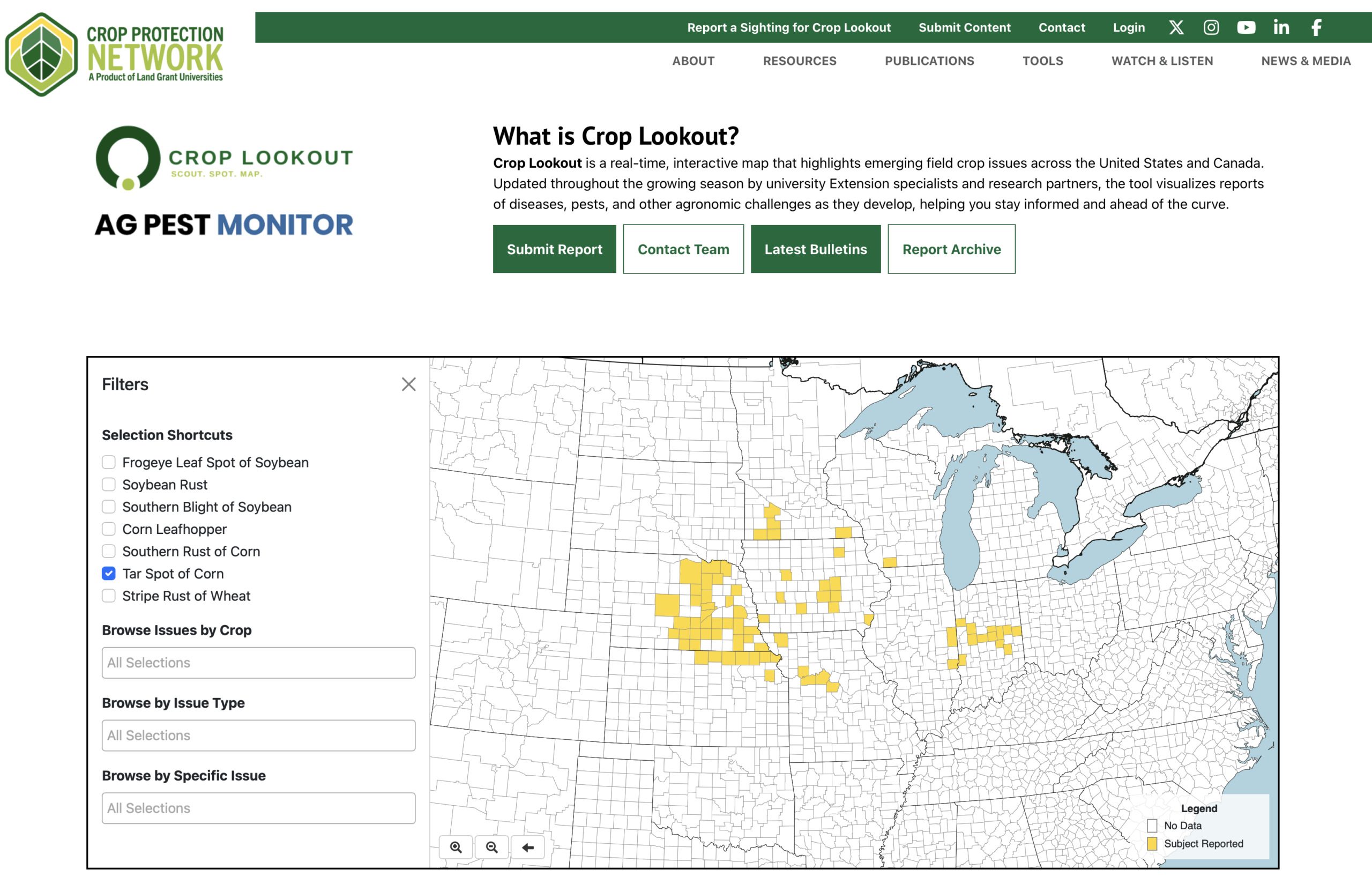
It never fails, I post an article indicating we hadn’t found stripe rust in Wisconsin this season, and a day later we found stripe rust in Wisconsin. This first report of the season was in research plots on a susceptible variety in Columbia Co., Wisconsin. Incidence and severity are low (Fig. 1), however the crop is at Feekes 9, so diligence is now needed in Winter wheat in Wisconsin. The current stripe rust Ag Pest Monitor shows Counties in Kansas, a county in Tennessee, two counties in Ontario Canada, and now Columbia Co. in Wisconsin (Fig. 2).
Stripe rust of wheat is caused by the fungus Puccinia striiformis. Stripe rust can be identified by orange/yellow pustules that typically occur in a striped pattern on the surface of the wheat leaf. However, under low severity, single, or very few sparsely spaced pustules may be observed. Subsequent infections can arise from a single pustule. Disease is favored by prolonged periods of rain (or dew), high relative humidity, and cool temperatures ranging from 50 to 60 ºF.
Management of stripe rust includes using resistant cultivars and applying fungicides. Although it is too late to make decisions on a cultivar, scouting should be prioritized to fields where you know there was a susceptible cultivar planted. Considering the early start to the stripe rust epidemic to our south, careful and frequent scouting will be critical this season. If stripe rust pustules are observed, consider sending samples to the University of Wisconsin Plant Disease Diagnostic Clinic for positive identification. If stripe rust is confirmed and it appears to be active, a fungicide application might be necessary.
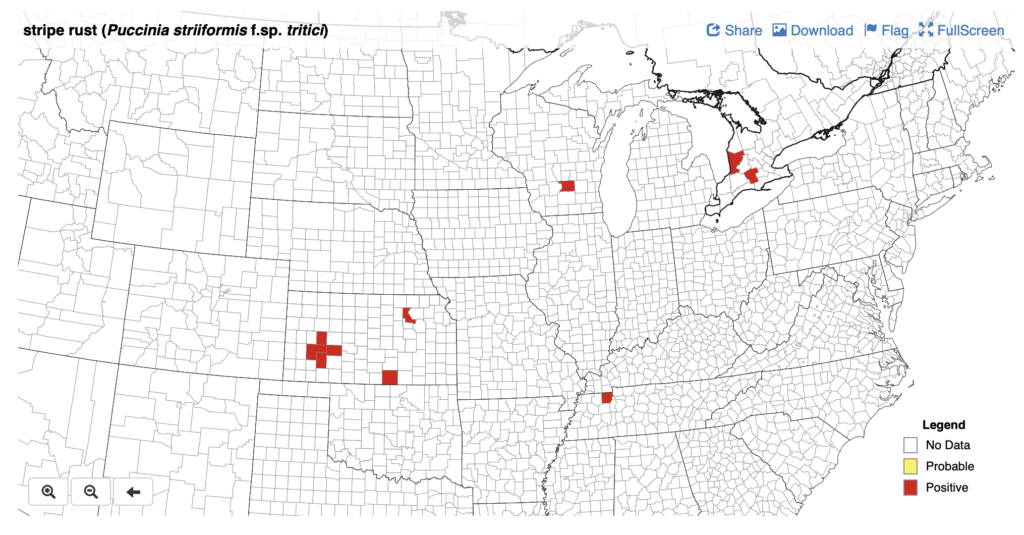
Figure 2. Counties where stripe rust has been found in 2026. Map Courtesy of Ag Pest Monitor and the Crop Protection Network.
In recent years in Wisconsin, we have not needed to apply a fungicide before the Fusarium head blight timing of Feekes 10.5.1. However, in years when stripe rust starts early, research has demonstrated that an application at the flag leaf emergence timing (Feekes 8) helps to protect grain yield. For more information on growth-staging wheat, check out the “Visual Guide to Winter Wheat Development and Growth Staging.”
In our work titled “Wheat grain and straw yield, grain quality, and disease benefits associated with increased management intensity” we found that years with intensive stripe rust epidemics (2016 and 2017) a fungicide application at Feekes 8, in addition to a second application of fungicide at Feekes 10.5.1, helped to protect yield at the end of the season. In years where there was no stripe rust, a Feekes 8 application of fungicide was not needed, but an application at Feekes 10.5.1 almost always provided a positive return on investment.
If you find stripe rust and are considering an application of fungicide at Feekes 8, you have lots of options of products. Be sure to consult the “Fungicide Efficacy for Control of Wheat Diseases” table to find products that provide excellent control of stripe rust. Be sure to check your local recommendations and also the label to verify the use of all products in your area. You can also check out our fungicide test reports HERE. Be sure to go back to the 2016 and 2017 era reports to find data on stripe rust, as those were the last years of epidemics suitable to obtain efficacy data on stripe rust.
As always, SCOUT, SCOUT, SCOUT!