Damon Smith, Extension Field Crops Pathologist, Department of Plant Pathology, University of Wisconsin-Madison
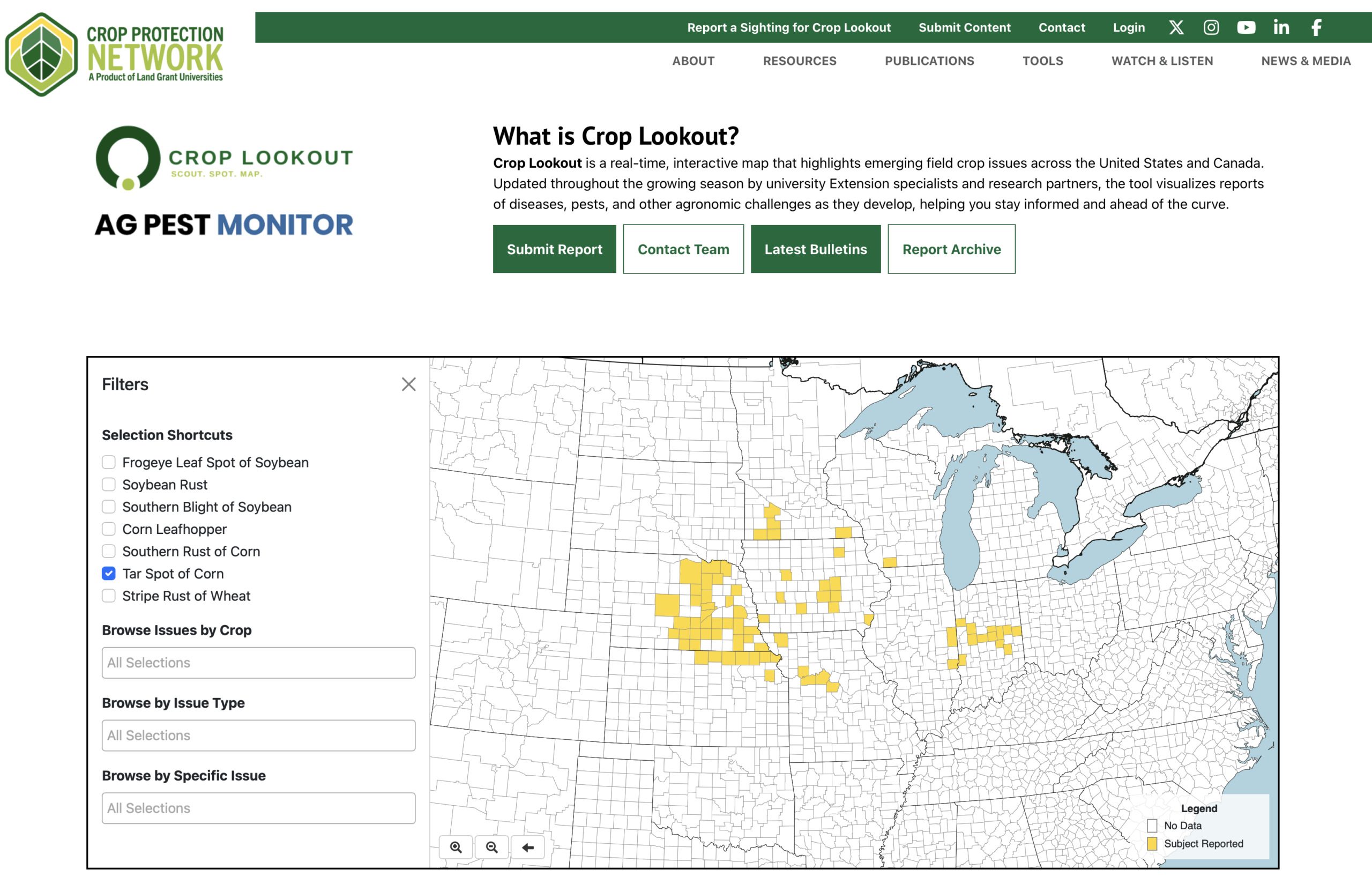
Tar spot has officially been confirmed in Wisconsin during the 2026 growing season, with a positive detection in Lafayette County. The disease has also been reported in several neighboring states, including Iowa, Missouri, Kansas, Nebraska, Indiana, Illinois, and Minnesota (Figure 1).
Before anyone panics, it is important to remember one thing: Tar spot is present, but disease incidence and severity are currently very low. There is no immediate need to apply fungicides.
Instead, now is the time to prepare, scout fields, and develop a management plan.
Tar Spot Is Here to Stay—Preparation Matters
Over the past several seasons, tar spot has become a regular part of corn production across the Midwest. Rather than viewing every new detection as an emergency, growers should focus on being prepared.
The first question to ask is simple: Have you had tar spot on your farm before?
If the answer is yes, then you should assume that the pathogen is still present in crop residue and capable of initiating future outbreaks. When susceptible corn, favorable weather, and the pathogen are all present, the classic “disease triangle” is complete and the risk of tar spot development increases.
The challenge, of course, is determining when weather conditions are favorable.
Using the Crop Protection Network Risk Tool
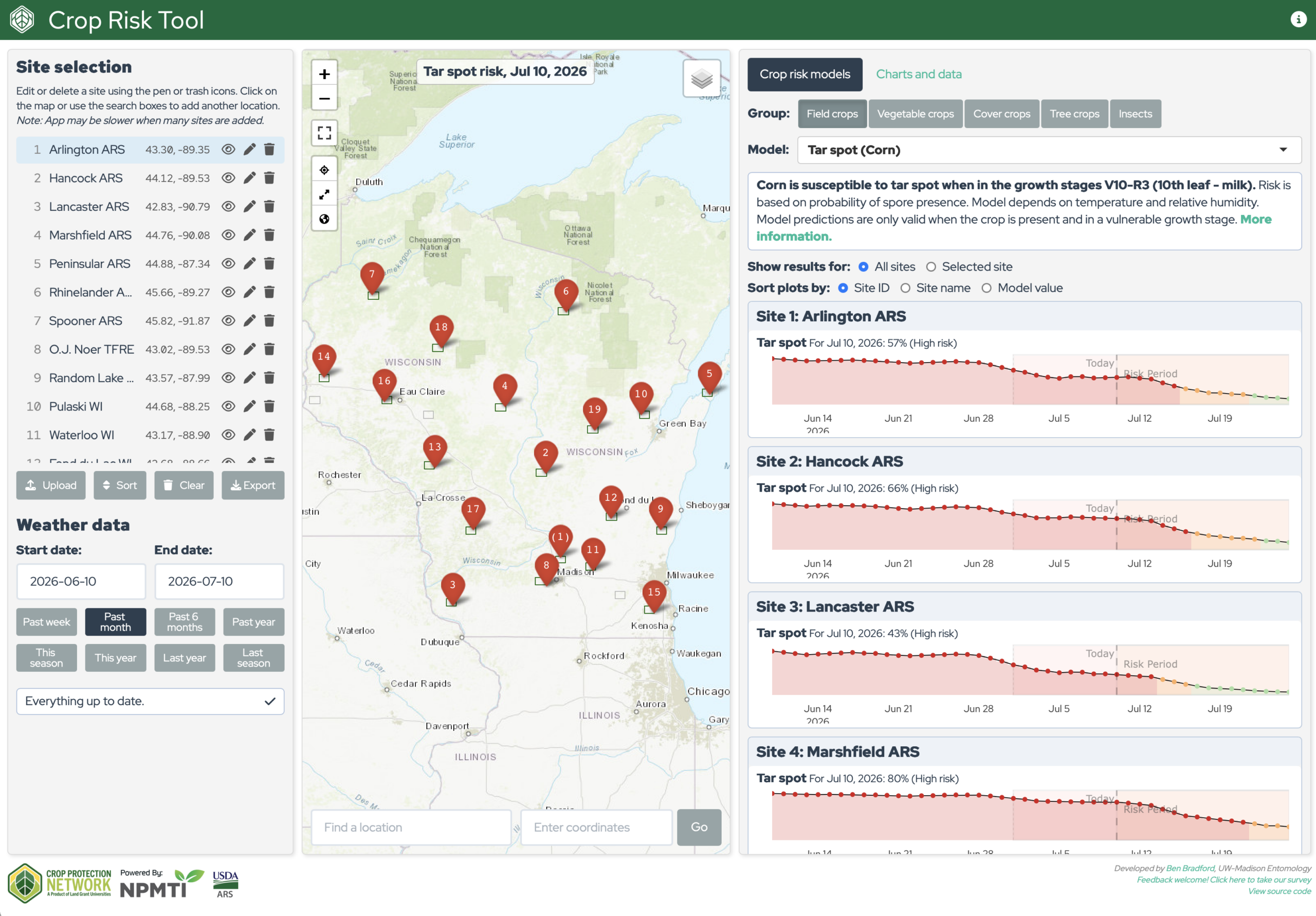
Fortunately, growers have access to a valuable resource: the Crop Protection Network (CPN) Tar Spot Risk Tool.
It is important to understand what this tool does and does not do. The risk tool does not tell you whether tar spot is present in your field. Instead, it evaluates recent weather conditions and estimates whether they have been favorable for disease development.
What Conditions Favor Tar Spot?
While rainfall can contribute to disease development, tar spot thrives under a pattern of:
- Alternating wet and dry periods
- Extended nighttime leaf wetness
- High humidity and dew points
- Moderate temperatures
The CPN model incorporates these factors and evaluates weather conditions over the previous 14- and 30-day periods. Using GPS coordinates, the tool delivers location-specific risk assessments based on cloud-based weather data.
In addition to current risk levels, growers should pay close attention to:
- Risk trend lines
- Short-term forecasts included in the tool
- Extended 14-day outlooks
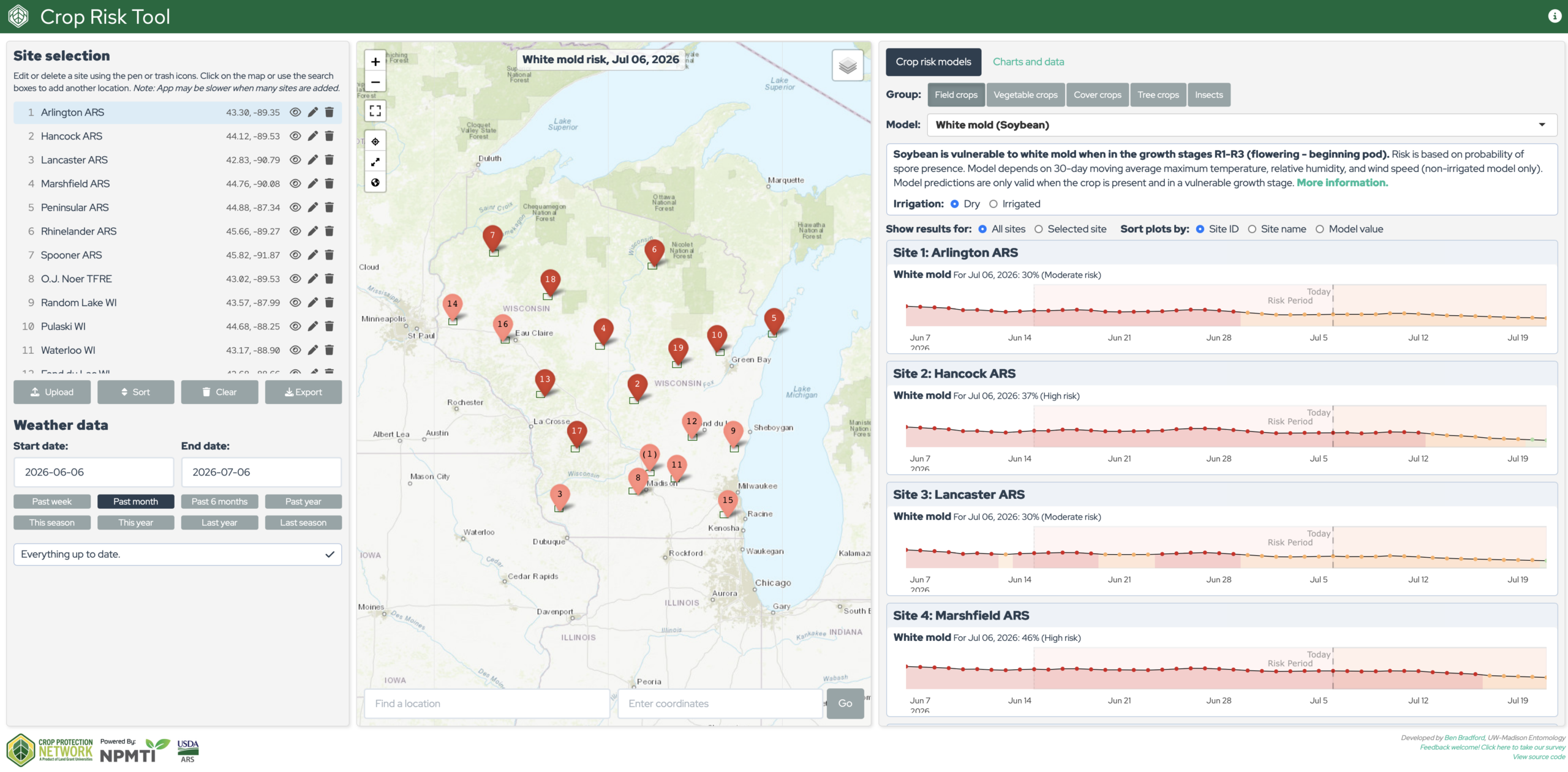
These features can help identify periods when disease pressure may increase and inform future management decisions (Figure 2).
Should Corn at V8–V10 Be Sprayed Right Now?
For most fields, the answer is no. At this stage of the season, tar spot infections are just beginning. Any symptoms observed now are likely to be:
- Low in severity
- Located on lower canopy leaves
- Present on leaves that contribute little to grain yield
Rather than rushing to apply fungicides, growers should focus on scouting. Fields that deserve the closest attention include:
- Locations with a history of tar spot
- Areas where the risk tool indicates elevated disease risk
- Hybrids known to be susceptible to tar spot
Use lower canopy leaves as an early warning system. Monitor disease progression and be prepared to protect the leaves that matter most for yield, particularly the ear leaf and leaves above it, if disease pressure increases later in the season.
When Should Fungicides Be Applied?
Successful tar spot management depends on both product selection and application timing.
Choosing the Right Fungicide
Research continues to show that fungicides containing multiple modes of action provide the best protection.
Preferred products typically contain combinations such as:
- QoI + DMI
- QoI + DMI + SDHI
These premixes not only improve disease control but also help slow the development of fungicide resistance.
Growers should consult the CPN Fungicide Efficacy Guide for product-specific performance ratings and consider using fungicide return-on-investment calculators when evaluating treatment decisions.
Timing Is Everything
Even the best fungicide can disappoint when applied at the wrong time. For most growing seasons:
- Applications before the V10 growth stage are rarely necessary.
- A single, well-timed fungicide application between VT and R3 is typically sufficient.
- Additional applications often provide only marginal economic return compared to one properly timed treatment.
The best timing decisions come from combining:
- Regular field scouting
- Crop history
- Risk tool information
- Current and forecasted weather conditions
The Bottom Line: Don’t Panic
The detection of tar spot in Wisconsin is not a reason for alarm; it is simply a reminder to stay vigilant.
As the season progresses you should do the following:
- Monitor the CPN Tar Spot Risk Tool
- Scout fields regularly
- Prioritize fields with a history of tar spot or susceptible hybrids
- Have a fungicide plan in place
- Coordinate with your custom applicator if fungicide applications are likely
If you plan to make a single fungicide application, target the VT–R3 growth stages when disease pressure justifies treatment.
Growers who spray earlier, between V8 and VT, should continue monitoring fields closely because a second application may be needed if favorable weather persists and disease pressure increases.
Most importantly: Scout. Scout. Scout.
Additional Resources: