Wisconsin dairy farmers are showing increasing interest in high-oleic soybean production as a valuable, high-energy feed source that can improve milk fat production and potentially increase overall farm profitability. When roasted or ground and fed to dairy cows, high-oleic soybeans offer improved oil quality, enhanced oxidative stability, and excellent feed value. As more dairy operations integrate soybean into traditional forage-based cropping systems, new agronomic and weed management questions are beginning to emerge from the field.
One question recently raised by a Wisconsin stakeholder was straightforward but important from a weed science perspective:
Can roasting soybean grain contaminated with waterhemp seed eliminate weed seed viability and help reduce the spread of waterhemp through manure applications?
This question is especially relevant because waterhemp has become the most troublesome herbicide-resistant weed in Wisconsin crop production systems. Weed management can be particularly challenging in some high-oleic soybean systems because certain varieties have limited herbicide trait options, reducing postemergence weed control flexibility and increasing the importance of integrated weed management strategies.
To help address this question, #WiscWeeds Scientist Dr. Ahmad Mobli conducted a small preliminary evaluation using roasted and not-roasted soybean samples provided by Mr. Mike Gronski, Pioneer Field Agronomist from Marshfield, Wisconsin. The objective was to determine whether the soybean roasting process could reduce waterhemp seed survival in contaminated grain before the feed ultimately entered manure management systems.
According to Gronski, the soybean roasting process was conducted at approximately 570 °F (299 °C), while the soybeans themselves reached temperatures near 295 °F (146 °C) for approximately one hour. After roasting, waterhemp seed viability was evaluated through germination test (Figure 1).
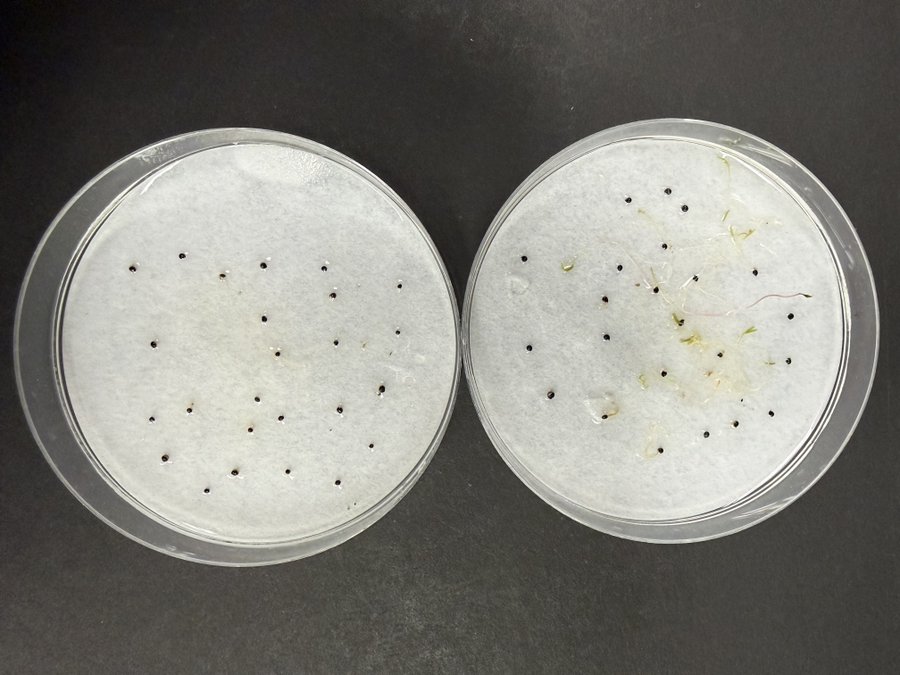
Figure 1. Representative germination response of waterhemp seed following the soybean roasting process. The left Petri dish contains roasted seed with no observed germination, whereas the right Petri dish contains non-roasted seed showing active waterhemp germination. Picture by Dr. Ahmad Mobli.
Preliminary results are encouraging (Figure 2). No waterhemp germination was observed from the roasted soybean samples, suggesting that roasting may substantially reduce or completely eliminate waterhemp seed viability in contaminated soybean grain (Figure 1). These observations align with previous research by Norsworthy et al. (2020), which demonstrated that exposure to 572°F (300°C) for 90 seconds substantially reduced Palmer amaranth seed survival. Because Palmer amaranth and waterhemp belong to the same plant family (Amaranthaceae), these findings suggest similar responses to high-temperature exposure may occur in waterhemp seed.
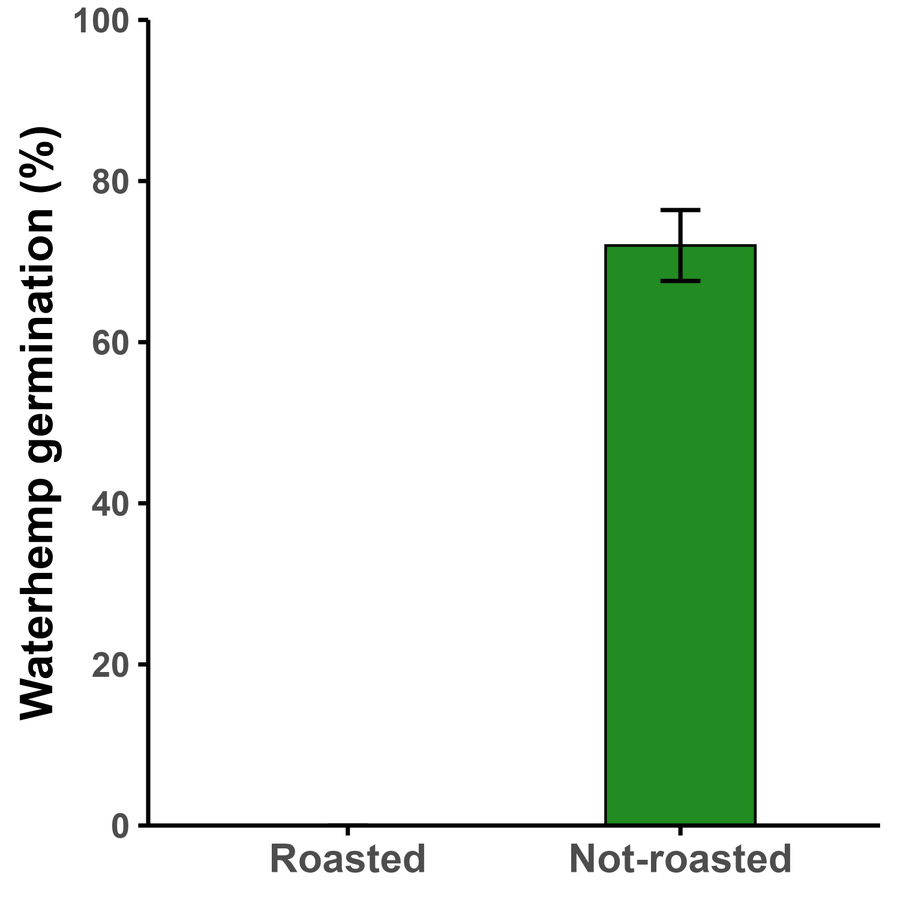
Figure 2. Effect of roasting at 295°F (146°C) for one hour during the soybean roasting process on waterhemp seed germination. Error bars represent the standard error of the mean (± SE).
Although additional research is needed, these early observations suggest that soybean roasting may provide an additional benefit beyond feed quality improvement by helping reduce the risk of spreading troublesome weed seeds through manure applications. This type of applied question directly reflects the mission of the WiscWeeds program: working closely with farmers, agronomists, and industry stakeholders to address emerging challenges associated with evolving Wisconsin cropping systems.
In addition to this preliminary work, Mr. Dan Smith, UW–Madison Division of Extension Weed Science Outreach Specialist, is working closely with stakeholders and the WiscWeeds team on a series of on-farm trials evaluating weed management strategies for high-oleic soybean production systems in Wisconsin. Stay tuned for results and field day opportunities.
As dairy farms adopt high-oleic soybean for improved feed quality and profitability, integrated weed management strategies will become increasingly important for protecting both crop productivity and long-term sustainability. In forage-based systems such as corn silage and alfalfa, crop harvest often helps suppress or prevent weed seed production. Soybean grain production, however, is different. Successful soybean production requires season-long weed management to protect yield potential, maintain grain quality, and facilitate harvest efficiency. While weed escapes may be less concerning in silage corn or alfalfa systems, they can create significant agronomic and economic challenges in soybean production systems.
For readers interested in learning more about agronomic management considerations for high-oleic soybean production systems, including identity preservation, weed management, disease management, and feed considerations, see the UW–Madison Extension article “Field Management of High Oleic Soybeans for Feed.”
Reference: Norsworthy JK, Green JK, Barber T, Roberts TL, Walsh MJ (2020) Seed destruction of weeds in southern US crops using heat and narrow-windrow burning. Weed Technology 34(4): 589-596.
This article was written by Drs. Ahmad Mobli (@AhmadrezaMobli) and Rodrigo Werle, UW-Madison Extension Cropping Systems Weed Science program.