As the 2025 corn and soybean harvest winds down across Wisconsin, it’s a good time to reflect on this year’s weed management successes and challenges and begin planning for 2026; starting with how cereal rye cover crops may fit into your system.
Cereal rye (aka winter rye) continues to gain traction among Wisconsin and Midwest farmers as a soil conservation crop that can also play a big role in weed management. Our WiscWeeds research program, in collaboration with colleagues at UW-Madison and across the United States, has been evaluating how to make fall planted cereal rye a reliable partner in integrated weed management programs, particularly for managing troublesome weeds like waterhemp and giant ragweed.
Why Cereal Rye?
Cereal rye is a hardy, fast-growing cover crop that can survive harsh winters and produce significant spring biomass before planting soybean. When properly managed, this biomass forms a thick mulch layer that suppresses weeds by reducing light, moderating soil temperature, and creating a physical barrier to emergence (Nunes et al. 2024). Growers across the region consistently mention weed suppression and reduced soil erosion as top reasons for adopting cereal rye (Chudzik et al. 2024).
How Much Biomass Is Enough?
Our multi-year field studies in Wisconsin funded by the Wisconsin Soybean Marketing Board and the United Soybean Board have helped define how much cereal rye biomass is needed to achieve meaningful weed suppression (Chudzik et al. 2024; Nunes et al. 2024). Research from UW–Madison’s WiscWeeds lab shows that the required biomass depends on whether the goal is to slow weed growth or reduce overall weed emergence.
- Waterhemp: About 2,500 lb ac⁻¹ of dry cereal rye (~19 inches tall) biomass is enough to reduce waterhemp growth and vigor by 50%, while achieving a 50% reduction in waterhemp density, fewer seedlings emerging, requires approximately 4,500 lb ac⁻¹ (~33 inches tall cereal rye; Nunes et al. 2024).
- Giant ragweed: Around 3,500 lb ac⁻¹ (~26 inches tall) of cereal rye biomass reduces giant ragweed growth by 50%, whereas 4,250 lb ac⁻¹ is needed to suppress seedling emergence by the same amount (~31 inches tall cereal rye; Chudzik et al. 2024).
These results highlight that more biomass generally means better weed suppression, but growers can tailor their cover crop management depending on whether the goal is to reduce weed vigor or prevent new weed seedlings from establishing.
Timing Termination: Walking the Tightrope
One of the biggest questions we get from growers is: When should I terminate cereal rye?
Our recent multi-state study found that delaying rye termination until soybean emergence (VE–VC growth stage) strikes the best balance between maximizing biomass and protecting yield of early planted soybean. Terminating too early reduces weed suppression, while waiting too long (beyond VC or 4,500 lb ac⁻¹, whichever happens first) can hurt soybean stand and yield. In our early soybean planting trials in southern Wisconsin (planted around April 25th), this window equated to approximately ~15 days between soybean planting and cereal rye termination.
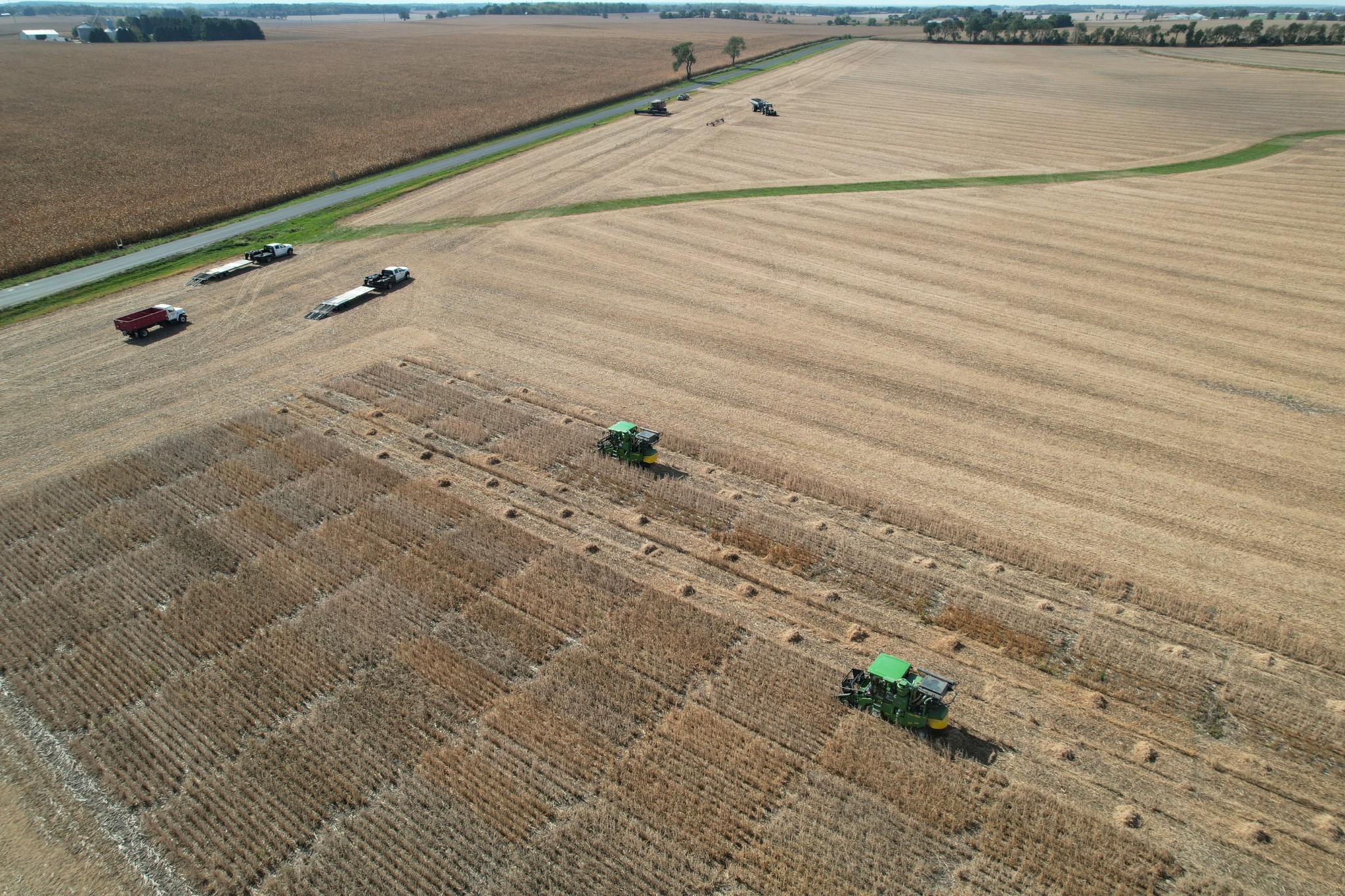
This “planting green” approach (Figure 1), planting soybeans into living rye and terminating the cover shortly after, works best when soybeans are planted early and paired with a soil residual herbicide. Successful implementation also depends on proper planter setup and adequate soil moisture at planting. Over the years, we have found that planting soybean early, when cereal rye biomass levels are lower, is generally easier than planting later, when the cover crop has accumulated excessive biomass.

Figure 1. WiscWeeds Research Program Coordinator, Ryan DeWerff, planting soybean green at UW-Madison Arlington Agricultural Research Station (picture taken May 06, 2025).
Cover Crops and Herbicides: Friends, Not Foes
A common concern is whether heavy cereal rye residue might “tie up” preemergence herbicides by intercepting the spray. Our field studies with preemergence herbicides showed that cereal rye biomass does intercept some herbicide, but early-season weed control was not reduced when using effective residual programs (Nunes et al. 2023; Nunes et al. 2023). This means growers can confidently use preemergence herbicides in systems that include cereal rye, especially when rainfall follows soon after to move product into the soil.
Soil Health Bonus
Beyond weed control, five years of continuous rye cover cropping at our Arlington and Lancaster Ag research stations have shown measurable gains in soil carbon, organic matter, and aggregate stability compared to conventional tillage (Felsman et al. In Preparation). These results confirm that the same practices helping suppress weeds also improve soil structure and long-term productivity.
Take-Home Messages
- Aim high for biomass: At least ~3,500–4,500 lb ac⁻¹ (4–5 Mg ha⁻¹) of dry cereal rye biomass is needed for meaningful suppression of tough weeds like waterhemp and giant ragweed.
- Plant early, terminate late: Delaying cereal rye termination until soybean emergence maximized weed suppression without hurting yield of early planted soybean in our trials.
- Pair with a soil residual herbicide: Effective preemergence programs complement cereal rye’s early-season weed suppression and extend control.
- Expect added soil benefits: Long-term cereal rye adoption (>5 years) improved soil health and resilience in our trials.
Cereal rye isn’t a silver bullet, but when properly managed, it’s a powerful tool in the weed management toolbox, reducing herbicide pressure, slowing resistance development, and improving the sustainability of Wisconsin cropping systems.
Acknowledgements: We thank the WiscWeeds team, past and present, as well as our colleagues at UW-Madison and across the United States who have supported our research and outreach efforts on cover crops for integrated weed management. We also gratefully acknowledge the Wisconsin Soybean Marketing Board and the United Soybean Board for funding these research efforts.
References
Chudzik, G., Nunes, J. J., Arneson, N. J., Arneson, G., Conley, S. P., & Werle, R. (2024). Assessment of cover crop adoption and impact on weed management in Wisconsin corn-soybean cropping systems. Agrosystems, Geosciences & Environment, 7, e70007. https://doi.org/10.1002/agg2.70007
Chudzik, G., Nunes, J. J., Arneson, N. J., Stoltenberg, D. E., & Werle, R. (2025). Cereal rye biomass effects on giant ragweed suppression inform management decisions. Agrosystems, Geosciences & Environment, 8, e70023. https://doi.org/10.1002/agg2.70023
Nunes, J. J., Arneson, N. J., Wallace, J., Ruark, M., Conley, S., & Werle, R. (2023). Impact of cereal rye cover crop on the fate of preemergence herbicides flumioxazin and pyroxasulfone and control of Amaranthusspp. in soybean. Weed Science, 71(5), 493–505. https://doi.org/10.1017/wsc.2023.46
Nunes, J. J., Arneson, N. J., DeWerff, R. P., Ruark, M., Conley, S., & Werle, R. (2023). Planting into a living cover crop alters preemergence herbicide dynamics and can reduce soybean yield. Weed Technology, 37(3), 226–235. https://doi.org/10.1017/wet.2023.41
Nunes, J. J., Arneson, N. J., Smith, D., Ruark, M., Conley, S., & Werle, R. (2024). Elucidating waterhemp (Amaranthus tuberculatus) suppression from cereal rye cover crop biomass. Weed Science, 72(3), 284–295. https://doi.org/10.1017/wsc.2024.21
This article was written by Rodrigo Werle and Guilherme Chudzik, University of Wisconsin-Madison Cropping Systems Weeds Science Program (aka WiscWeeds)